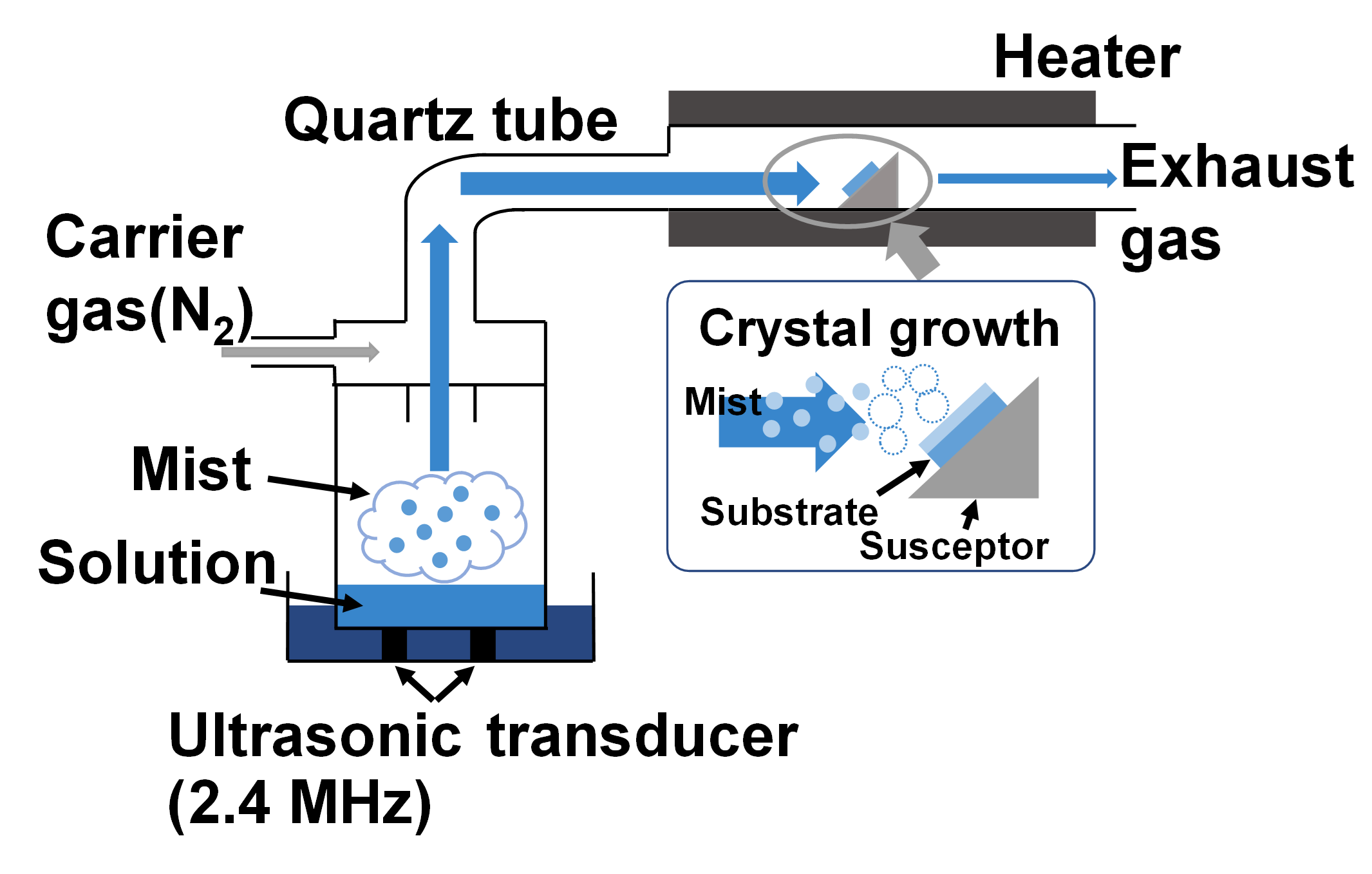
| Our laboratory focuses highly efficient power conversion and producing renewable energy towards achieving sustainable society. The key of our study is exploring new material. We have established growth technique of novel materials via mist chemical vapor deposition (mist CVD), and investigated their physical properties and device demonstrations. Mist CVD is quite simple technique, however, grown films exhibit excellent properties comparable to that grown by other growth methods. Additionally, there are materials which can be grown by mist CVD only, indicating high potential as a thin film growth technique. |
|
|
|
|
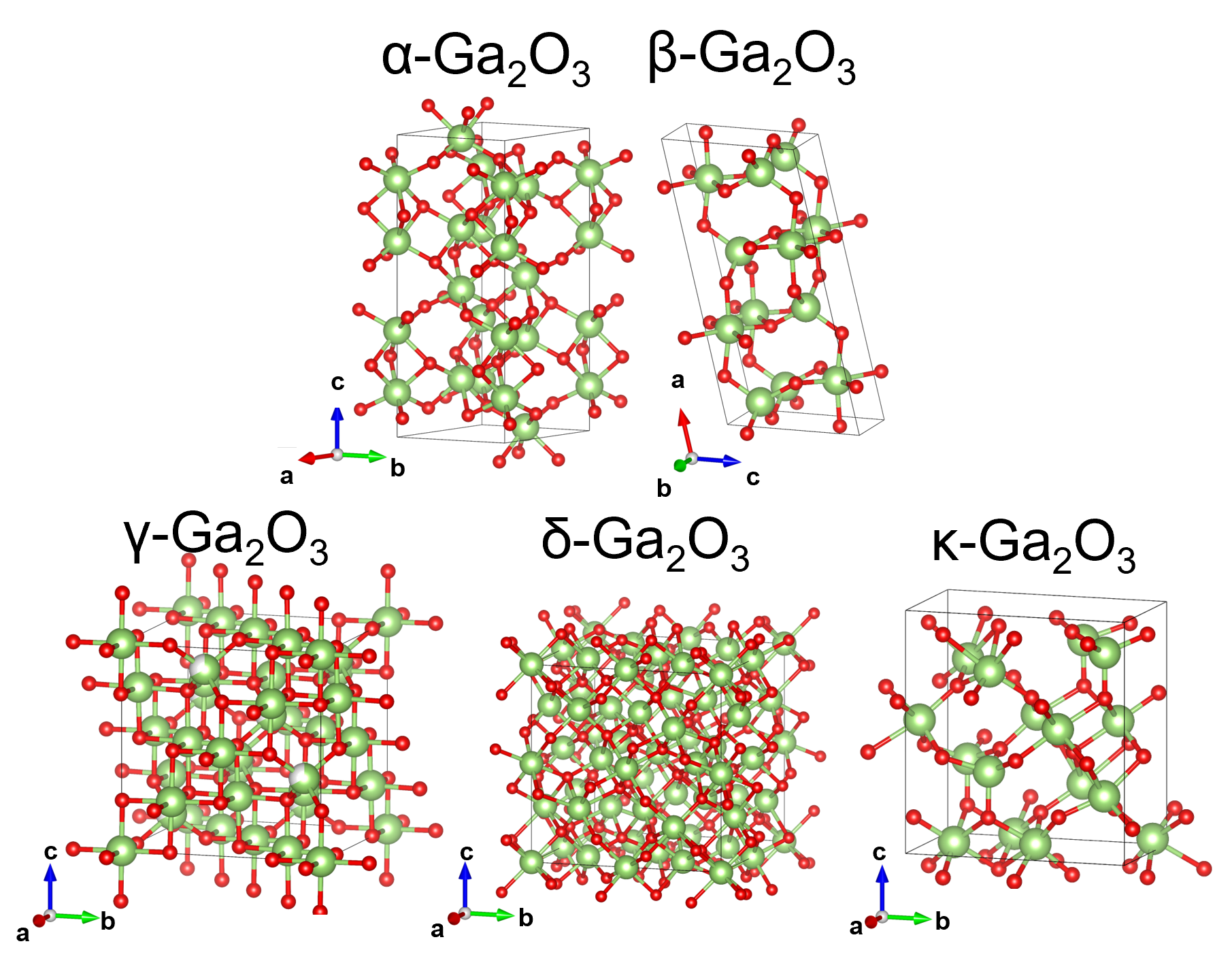
We focus on ultra-wide-bandgap oxide semiconductors as promising materials for low-loss power switching devices. Our research centers on gallium oxide (Ga2O3) and germanium dioxide (GeO2), which possess even larger bandgaps than next-generation semiconductor materials such as silicon carbide (SiC) and gallium nitride (GaN), both of which are already being used in practical applications. Due to their multiple crystal polymorphs, Ga2O3 and GeO2 exhibit diverse physical properties and offer a wide range of potential applications. Our laboratory has developed techniques for controlling these crystal phases. By growing single-phase Ga2O3 and GeO2 without any incorporation of other polymorphs, we aim to fully exploit the intrinsic potential of these materials. Building on our expertise in phase control of ultra-wide-bandgap materials, we are also pursuing the synthesis of new oxide semiconductor materials. |
|
|
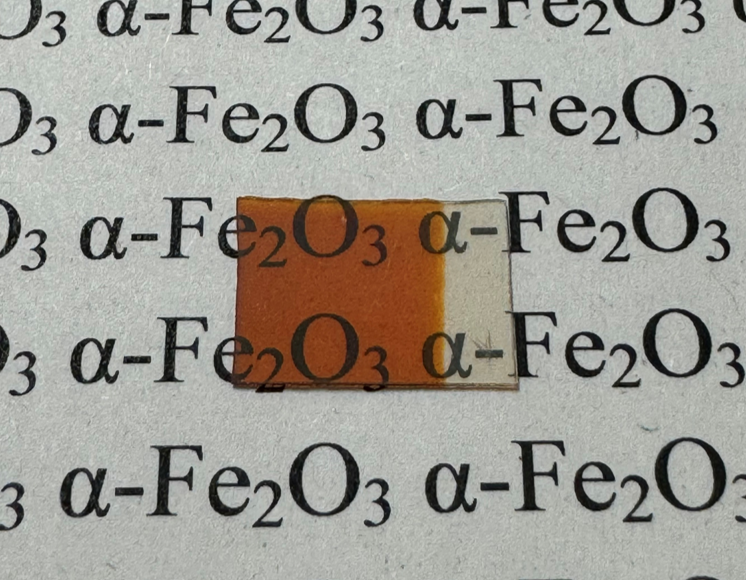
| We also conduct research on artificial photosynthesis using oxide semiconductors. In contrast to the ultra-wide-bandgap oxides described above, this work focuses on narrow-bandgap semiconductors that can be driven by sunlight, enabling solar-powered artificial photosynthesis. Our target materials include hematite ( -Fe2O3), widely known as rust, Bi-doped In2O3, and related compounds. These materials also exhibit multiple crystal polymorphs. By leveraging our expertise in phase-controlled crystal growth, we aim to synthesize high-quality artificial photosynthesis materials with precisely tailored crystal structures and enhanced performance. |
|
|
|
| Although the number of elements in the periodic table is limited, combining them in different ways creates infinite possibilities. Your ideas may enable the growth of entirely new semiconductors and potentially deliver breakthroughs that could surprise the world. |